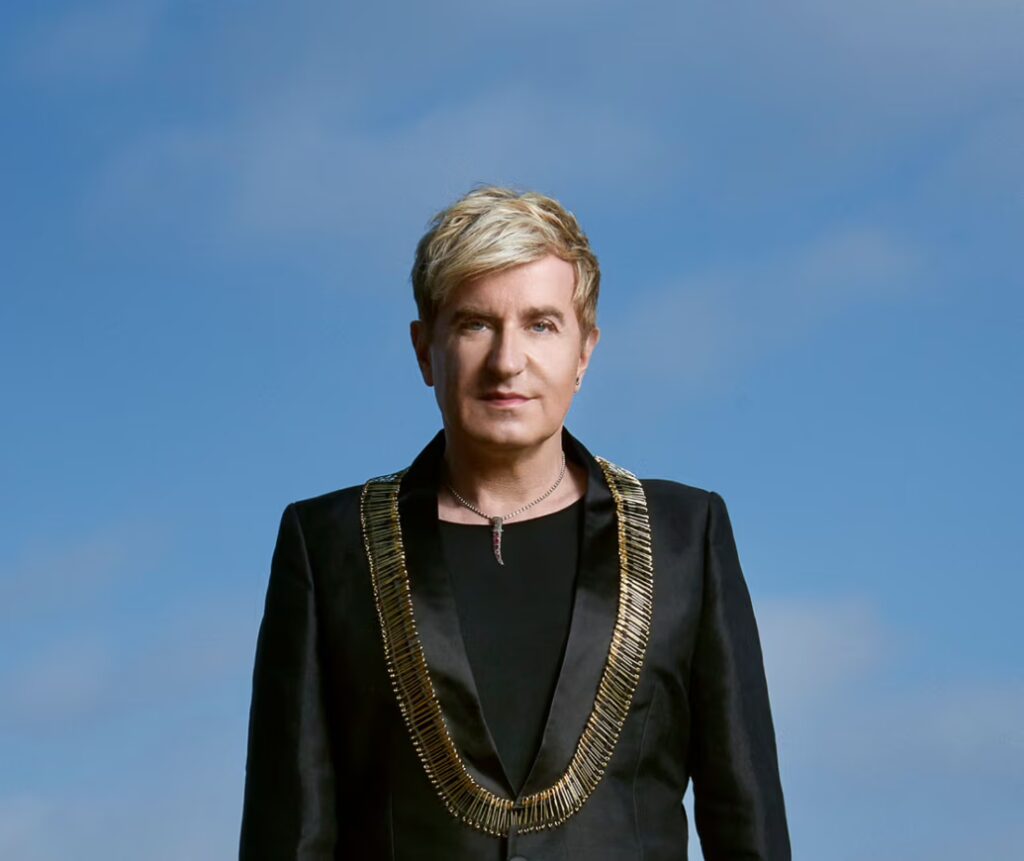
On May 24, the 38-year-old music director of the Louisville Orchestra, Teddy Abrams, returned to Walt Disney Concert Hall to conduct works by Caroline Shaw, George Gershwin and Richard Strauss.
The program began with the LA Phil commission of The Observatory, a large orchestral composition by Shaw composed in 2019, and inspired in part by Shaw’s view of Los Angeles from the Griffith Observatory where she had hiked, her relationship with the cosmologist Kendrick Smith and her fascination with sci-fi films. The result is a 16-minute work, parts of which sounded like they could have been a film score. I have to admit that although the piece was approachable and interesting, it felt a bit repetitive at times in a way that some minimalist compositions are nowadays. However, Abrams gave a fine reading, and the Phil, which plays at the Hollywood Bowl and has premiered film music for decades, was the perfect orchestra to pull it off.
The first half concluded with the Piano Concerto in F by Gershwin with Thibaudet as soloist. The Concerto in F is more like a concerto for orchestra with piano accompaniment given that there are long sections of orchestral writing without piano and other sections where the piano is more part of the orchestra score rather than a solo instrument. Nonetheless, it is a rousing work, infused, not surprisingly, with jazz rhythms and motifs and, once again, what better orchestra to perform it than the LA Phil and what better conductor to lead them than Abrams, a clarinetist (think of the clarinet opening to Rhapsody in Blue) and composer in his own right? Thibaudet, who resides in both Los Angeles and Paris, displayed his own classical and jazz chops in a standout performance that brought the audience to their feet screaming for more. Thibaudet gracefully acceded with a brilliant performance of the A prole do bebê No. 1, W140: 7. O polichinelo by Heitor Villa-Lobos.
The second half of the concert was devoted to a single work, Also Sprach Zarathustra Op. 30 by Strauss. The audience had a hint of what was to come when they filed back into the hall after intermission because Joanne Pearce-Martin was warming up on the WDCH organ. In fact, it sounded a little like the organ accompaniment to a film. Then, of course, the famous opening to the work was made many times more famous by Stanley Kubrick in his film, 2001: A Space Odyssey. So, there was some perhaps unintentional thematic relationship to Shaw’s The Observatory, although Strauss’ work has nothing to do with space and more to do with Friedrich Nietzsche’s philosophical work of the same name.
Zarathustra is an extended tone poem with gorgeous orchestration and made all the more impressive with the organ scored for the first half and the great brass writing. Strauss, after all, grew up in a household with a father who was a famous horn player, so he knew how to write for brass instruments. Zarathustra gives many musicians in the orchestra the chance to shine, and shine they did. A special shout out goes to Principal Trumpeter Thomas Hooten, who blew everyone away with his tasteful solo in the Gershwin and his powerful playing in the Strauss. Also, kudos to Principal Violist Ben Ullery, Associate Principal Cellist Ben Hong and Principal Concertmaster Martin Chalifour. But that’s not all. Principal Bassoonist Whitney Crockett had the opportunity to show his strong, yet sweet sound.
The Phil simply sounded great in all three works. And what can one say about Abrams? Already at the young age of 38, he demonstrated why he is such a powerhouse as a conductor. He was totally immersed in the music on the podium and brought the orchestra, and the audience, along with him. And, like Dudamel, he stood off to the side at the conclusion of each work, reserving the adulation of the audience for the musicians in the orchestra and not for himself.
The next time Abrams comes to town, don’t miss him!
—Henry Schlinger, Culture Spot LA
For information about upcoming concerts, visit www.laphil.com.